Author Archives: Tom

The 2015 State of the Lake Summary

2015 State of the Lake Summary

2015 State of the Lake summary

2015 State of the Lake summary

Lake Champlain Basin program released the 2015 State of the Lake. Summary and key points of the report include:

Over 85% of Lake Champlain’s water is consistently of excellent quality, with another 13% of usually good quality.

In the remaining 2% of the Lake – most notably in Missisquoi and Saint Albans Bays – the conditions are seasonally alarming, with excess nutrients triggering blue green algae blooms.


More Articles About Lake Champlain and Blue Green  Algae:

The state of Lake Champlain, in 3 sentences, from the Lake Champlain Basin Program. pic.twitter.com/y37DaX0Q8j

Sourced through Scoop.it from: twitter.com

See on Scoop.it – Lake Champlain Life

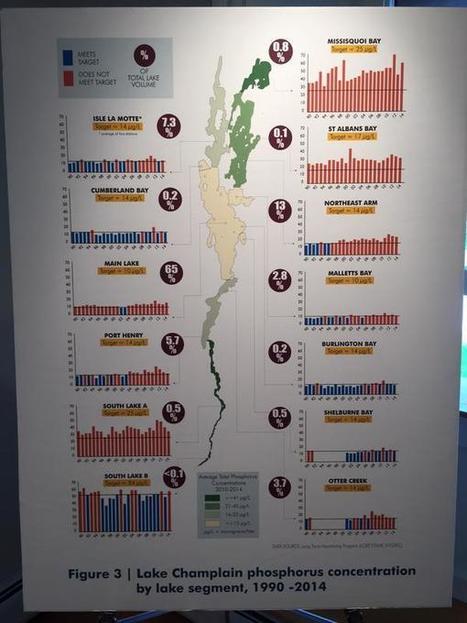
Lake Champlain phosphorus concentration 1990-2014

Lake Champlain phosphorus concentration by lake segment

Taylor Dobbs on Twitter | Lake Champlain Life | Scoop.it

Lake Champlain phosphorus concentration 1990-2014

Lake Champlain Basin program released the 2015 “State of the Lake” report. This infographic shows Lake Champlain phosphorus concentration broken out by lake segment or section over the 1990 to 2014 time period.

Phosphorus concentration is directly related to the increase of toxic blue green algae blooms in Lake Champlain and other waters.

More Articles About Lake Champlain and Blue Green  Algae:


Lake Champlain Basin program unveiling 2015 “State of the Lake” report. Lots of info on phosphorus loading. pic.twitter.com/MlsxlkslgN

Sourced through Scoop.it from: twitter.com

See on Scoop.it – Lake Champlain Life

Lake Champlain Longboat Flotilla: The Bougainville Voyage to Arrive at Saint Anne’s Shrine on July 3rd

Lake Champlain Longboat Flotilla: The Bougainville Voyage


Lake Champlain Longboat Flotilla: The Bougainville Voyage to end Journey at Historic Saint Anne’s Shrine in Isle La Motte   Saint Anne’s Shrine in Isle La Motte is pleased to announce the arrival of the Lake Champlain Longboat Flotilla:  The Bougainville Voyage on Friday, July 3, 2015 through Sunday, July 5. Commemorating the 260th Anniversary of beginning of the War for Empire in America, a defining moment in our history, the boats will resemble French vessels of the year 1755 that would have plied the lake at that time.  The voyage will begin at Crown Point, the site of the 1735 Fort Ste. Frederic and five days later, ending at historic Saint Anne’s Shrine in Isle La Motte. There are several historical locations in between including the memorial at Burlington, Valcour Island and Cumberland Bay.   The Flotilla will end their journey at the Shrine, on Friday, July 3, setting up a “typical” colonial French encampment on the Shrine grounds and historically costumed in the clothing of the mid 18th Century of the French soldiers and sailors.  The Flotilla will consist of four longboats, led by L’Alliance, a former RCN 27 foot whaleboat with historic sailing rig.    On Saturday afternoon, July 4th, visitors are welcome to view the camp, boats and learn about sea life in the 18th Century. There will be a musket demo, and visitors will have the opportunity to view the camp, boats and learn about sea life in the 18th Century! All Welcome!The Lake Champlain Longboat Flotilla: The Bougainville Voyage will be at Saint Anne’s Shrine in Isle La Motte Friday, July 3, 2015 through Sunday, July 5. This event commemorates the 260th Anniversary of the start of the War for Empire in America, a defining moment in the history of our region.


The Longboat Flotilla

The Flotilla will consist of four longboats resembling the French vessels that would have travelled Lake Champlain in 1755, and will be led by L’Alliance, a former RCN 27 foot whaleboat with historic sailing rig. The voyage starts at Crown Point, New York –  site of the 1735 Fort Ste. Frederic (later Fort Crown Point). After stops at several historical locations along the way including Burlington, Valcour Island and Cumberland Bay, the journey ends at historic Saint Anne’s Shrine in Isle La Motte, Vermont.


Lake Champlain Longboat Flotilla: The Bougainville Voyage to end Journey at Historic Saint Anne’s Shrine   Saint Anne’s Shrine in Isle La Motte is pleased to announce the arrival of the Lake Champlain Longboat Flotilla:  The Bougainville Voyage on Friday, July 3, 2015.  The Flotilla will end their journey at the Shrine, setting up camp on the Shrine grounds and historically costumed in the clothing of the mid 18th Century of the French soldiers and sailors.  The Flotilla will consist of four longboats, led by L’Alliance, a former RCN 27 foot whaleboat with historic sailing rig.  All are welcome to stop by over the weekend to view the camp, boats and learn about sea life in the 18th Century!


The Flotilla ends their journey at the Shrine, on Friday, July 3, and will setup a typical colonial French encampment on the Shrine grounds.Participants will be historically costumed in the mid-18th century clothing of the of French soldiers and sailors.


Lake Champlain Longboat Flotilla: The Bougainville Voyage

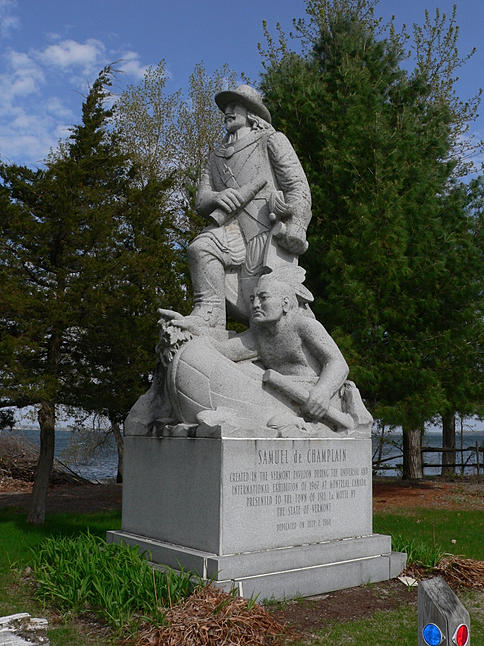
Statue in Isle La Motte of
Samuel de Champlain and guide,
at the site Champlain is said to have first set foot in Vermont in 1609.
(Sculptor E.L.Weber, 1967)

On Saturday afternoon, July 4th, visitors are welcome to view the camp, boats musket demonstrations, and learn about 18th century sea life.


Other Lake Champlain Historic Sites:

Scientists Claim Nitrogen as Bad as Phosphorus for Algae Blooms in Lake

Researchers Say Levels of Nitrogen as Bad as Phosphorus for Algae Blooms

Scientists Claim Nitrogen as Bad as Phosphorus for Algae Blooms in Lake

Blue green algae bloom

The common wisdom held that algae blooms could only be caused by high concentrations of phosphorus in freshwater lakes, but new research show increased levels of nitrogen as bad as phosphorus for algae blooms formation in lakes.

At its 2015 conference last May in Burlington, Vermont, the International Association for Great Lakes Research held a session on that topic. chaired by Dan Peckham coordinator of the Harmful Algal Blooms Workgroup of the New England Interstate Water Pollution Control Commission.

Blue-green algae contains cyanobacteria, which produce the cyanotoxins that make seasonal blooms harmful, while green algae are harmless, according to Peckham. Blue-green algae is the source of the seasonal toxic blooms on portions of Lake Champlain.

“Usually the concentration of cyanotoxins is associated with biodegradable dissolved phosphorus, but some people have been hypothesizing more recently that high levels of nitrogen may also be responsible,” ~ Dan Peckham, New England Interstate Water Pollution Control Commission


Runoff from Farm fields

Unprotected farm fields yield topsoil as well as
farm fertilizers and other potential pollutants when heavy rains occur.

Both nitrogen and phosphorus are needed to grow any kind of plant, including algae.

Nitrogen and phosphorus wash into water bodies and then release into the air. The chemicals come from stormwater, wastewater, fossil fuels, soaps and fertilizers, according to the Environmental Protection Agency website.


“Excessive amounts of growth are caused by high levels of both nitrogen and phosphorus. Nitrogen is not worse than phosphorus, but both need to be reduced. The bottom line is that nitrogen input needs to be controlled along with what we already know about controlling phosphorus input… If we only reduce phosphorus we may not get there fast enough in terms of getting a lake or even a marine system back to what we would deem desirable.”  ~ Hans Paerl, Professor of marine and environmental sciences,University of North Carolina-Chapel Hill


Paerl said freshwater researchers have developed tunnel vision by focusing on phosphorus for so long. The same protocols that keep phosphorus out of lakes and streams apply to nitrogen. he added.


Scientists Claim Nitrogen as Bad as Phosphorus for Algae Blooms in Lake

Nitrogen as Bad as Phosphorus for Algae Blooms in Lake


Nitrogen Levels Could Make Drinking Lake Water Unsafe

Elevated levels of nitrogen in drinking water are also known to cause health problems in young children, according to the Vermont Health Department. Last year algae blooms were responsible for contaminating drinking water supplies for several communities on Lake Erie.
Mike Winslow, a staff scientist at the Lake Champlain Committee, said he has never known of a time where blooms in Lake Champlain have affected the quality of drinking water in Vermont.


More Articles About Lake Champlain and Blue Green  Algae: