Author Archives: Tom

Lake Champlain Gas Pipeline Phase II Proceedings Delayed

PSB Delays Lake Champlain Gas Pipeline Phase II Proceedings

PSB may consider sanctions

Lake Champlain Gas Pipeline Phase II Proceedings Delayed

Lake Champlain Gas Pipeline Proposed Route

Vermont’s Public Service Board (PSB) postponed hearings on Phase II of the Vermont Gas Systems pipeline project under Lake Champlain from Middlebury, VT to Ticonderoga, NY after Vermont Gas Systems revealed more cost overruns and requested the delay.

Vermont Gas had asked the Public Service Board to delay the project’s Phase II hearings after it announced its costs for Phase I were runnng about $68 million ahead of projections – $154 million, up from the initial $86 million estimate.

Vermont Gas CEO Don Rendall said last month that the company was filing new, increased cost estimates for Phase I of the project and asked for the delay on regulatory proceedings for Phase II to allow Vermont Gas to review cost estimates for that phase.

Phase I is designed to bring Vermont Gas service south from Vermont’s Chittenden County to Addison County, and the cost increases might lead the Public Service Board to reevaluate its approval for that phase.

Phase II of the pipeline would conduct the natural gas from its Phase I terminus in Addison County under Lake Champlain to Ticonderoga’s International Paper mill.

Lake Champlain Gas Pipeline Phase II Proceedings Delayed

Opposition to Lake Champlain Gas Pipeline

Some pipeline opponents think the delay for Phase II consideratuion was a mistake. They hold that the Public Service Board should dismiss it totally.

Vermont Public Interest Research Group (VPIRG) said the board should dismiss the petition without prejudice on conditions.

VPIRG pointed out the failure ofVermont Gas Systems provide quarterly updates to the Public Service Board, which regulates utilities in Vermont. Vermont Gas had committed to quarterly cost updates forboth Phase I and Phase II after they announced a price increase last July. VPIRG said Vemont Gas had not delivered on that commitment.

Others, including Vermont’s Agency of Natural Resources, the Conservation Law Foundation and some landowners along the pipeline route, had no problems with the company’s request to delay Phase II hearings.

Solar Haven Farm, an organic farm located along the route of the pipeline, called for a timely conclusion to the matter.

The parties “… should not be held in a perennial holding pattern wherein no personal or business plans can be made because at any time the Docket 8180 [for Phase II] could be reactivated. In the interests of fairness to the parties, Solar Haven Farm respectfully asks the Board to set a deadline by which VGS must make its decision whether it will withdraw or proceed with its Docket 8180 petition. The docket 8180 must have closure date.” ~ PSB filing for Solar Haven Farm.

The Public Service Board ruling said it “will determine at a later date whether to hold a status conference, and whether to reschedule the technical hearings in this proceeding or dismiss VGS’s petition,” and that “the board will address the request for sanctions in due course.”


More Articles About Lake Champlain Ecology:


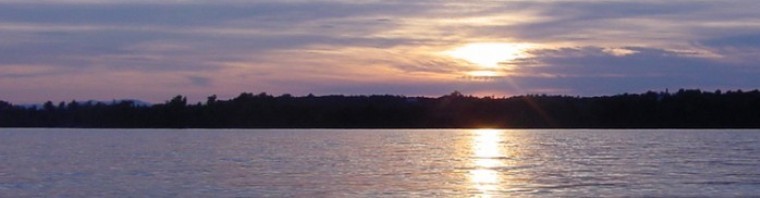
Lake Champlain Sunset from Grand Isle, Vermont 

Lake Champlain Sunset from Grand Isle, Vermont (photo by Betsy Dall) 1/04/2015

Lake Champlain Sunset from Grand Isle, Vermont
(photo by Betsy Dall) 1/04/2015

This beautiful sunset was captured by Betsy Dall on January 4, 2015. The view is of the sun setting over North Hero, VT and looks across ‘The Gut’ from Grand Isle.


More Lake Champlain Photos:


Cold Lake Champlain Ice

Ice on Lake Champlain

Lake Champlain ice is still too thin to support recreational use, but it starting to form, and Lake Champlain’s winter activities will soon be underway.


Following are the dates of Lake Champlain ice closing since 1970. The data is from the U.S. Weather Bureau or National Weather Service records.

Lake Champlain ice fishing

Lake Champlain ice fishingLake Champlain ice skatingLake Champlain ice skating

2014 February 12
2013 Not Closed
2012 Not Closed
2011 Not Closed
2010 Not Closed
2009 Not Closed
2008 Not Closed
2007 March 2
2006 Not Closed
2005 March 8
2004 January 27
2003 February 15
2002 Not Closed
2001 March 2
2000 Not Closed
1999 Not Closed
1998 Not Closed
1997 Not Closed
1996 February 5
1995 Not Closed
1994 January 23
1993 February 7Lake Champlain skiing
1992 Not Closed
1991 Not Closed
1990 Not Closed
1989 February 22
1988 Not Closed
1987 February 18
1986 February 10
Lake Champlain ice surfing1985 Not Closed
1984 Not Closed
1983 Not Closed
1982 January 28
1981 January 14
1980 Not Closed
1979 February 11
1978 February 5
1977 January 16
1976 Not Closed
1975 Not Closed
1974 Not Closed
1973 February 20
1972 February 10
1971 February 2
1970 January 21

More Articles About Lake Champlain Ice Safety:


Mike Smiles appointed new Executive Director at LCMM

Lake Champlain Maritime Museum (LCMM) announces appointment of Mike Smiles as new Executive Director

Mike Smiles appointed new Executive Director at LCMM

J. Michael “Mike” Smiles
new Executive Director at LCMM

The Board of Directors of Lake Champlain Maritime Museum (LCMM) announced the appointment of J. Michael “Mike” Smiles as the museum’s new Executive Director. Mike will assume the role from Erick Tichonuk, who is stepping down from the position. Mike begins the leadership role on January 5, 2015.


“Mike brings a breadth of experience that will broaden the Museum’s impact in reaching and serving diverse audiences through our collection of historic replica vessels, innovative education programs, hands-on rowing programs, publications, research, and permanent and traveling exhibits,. We’re delighted to have him join our team of highly dedicated staff, committed volunteers, and engaged members and donors as we begin our 30th year of operation.” ~ L.C.M.M. Board Chair Bob Beach

Smiles is a career non-profit professional, who comes to LCMM from the New England Science & Sailing Foundation (NESS) in Stonington, CT. At NESS he served as Vice President and Director of Advancement for three years. NESS was named as the 2013 Outstanding Community Sailing Center in America by US Sailing, and offers education programs to more than 3,000 students annually at three locations. NESS also established one of the first AmeriCorps public school partnerships incorporating kayaking, marine science, and sailing to advance science, technology, engineering, and math (STEM) education.

“I am absolutely thrilled to be joining such an outstanding organization, especially given its inspiring and innovative mission of discovery and hands-on learning. I am proud to help lead the Museum as a center of excellence in nautical archaeology, boat building, and touring replica historic ships that bring history to life for thousands of people.” ~ J. Michael Smiles, new Executive Director at LCMM

A long-time summer resident of Essex, NY on Lake Champlain, Smiles is the former Director of Development at Mystic Seaport – the Museum of America and the Sea, and Chief Development Officer of The Hole in the Wall Gang Camp for seriously ill children founded by Paul Newman. He holds a Master’s degree in Business Administration from the University of New Haven and is a graduate of Beloit College in Wisconsin. He and his wife, Martha, will be moving to Vermont from their home of 20 years in Noank, Connecticut.

Smiles will be part of an effort to raise awareness and continue expanding the Museum’s education programs, and secure its leadership in nautical archaeology and educational outreach and impact.

“Many members, donors, and partners are eager to support the Museum because they appreciate its innovative approach in bringing history to life through hands-on learning and self-discovery. Erick’s contribution to the Museum over the years has been immeasurable and I look forward to working with him in my new role as Executive Director to assure his depth of knowledge and passion for LCMM’s mission will best serve the Museum’s bright future.  In the meantime, I look forward to meeting LCMM’s many friends, members, and partner organizations as I embrace what I believe to be one of finest maritime museums in the country.” ~  Mike Smiles, new Executive Director at LCMM

About the Lake Champlain Maritime Museum:

Mike Smiles appointed new Executive Director at LCMM

Lois McClure and Philadelphia II docked at North Harbor, at LCMM Basin Harbor facility.
(Photo by Bob Hardy)

Through nautical exploration, an active fleet of historic replica vessels, boat-building programs for special needs students, and hands-on exhibits and learning adventures for all ages, Lake Champlain Maritime Museum brings to life the stories of Lake Champlain and its people. Its mission is to preserve and share the rich history of the Lake Champlain region with a broad audience through publications, research, exhibits and education programs. LCMM’s exhibit buildings and on-water programs are seasonal; archaeological research, collection management and education programs continue all year. More information can be found at  www.lcmm.org or call 802 475-2022.


More Articles About The Lake Champlain Maritime Museum:


Federal Funding for Lake Champlain

Federal Budget Includes Funding For Lake Champlain

Lake Champlain stands to benefit from the $1 trillion spending plan recently signed into law by President Obama.

Almost $4.4 million is targeted for water quality restoration and monitoring efforts on Lake Champlain; the funds will be administered by the Lake Champlain Basin Program (LCBP). LCBP Director, Bill Howland, said the money could support about 100 projects around the lake. LCBP received only $1.4 million last year.

Federal Funding for Lake Champlain Cleanup

Runoff of manure used as fertilizer rain storms is one of the leading causes of phosphorus overload in Lake Champlain

One example of such a project might be hiring technicians to provide engineering plans that prevent manure runoff to farmers. The farmers could then apply for USDA money to help with implementing the plan. Last summer the USDA awarded Vermont $45 million to improve agricultural practices.

“It’s kind of a behind-the-scenes support program that really makes our dollars leverage a lot of other federal dollars,”  ~ Bill Howland, Director of the Lake Champlain Basin Program.

Howland said the money will help LCBP continue water quality and biological monitoring programs. This is the single largest expense -about $500,000 per year, according to Howland. Other uses of the money will include preventing the spread of invasive water chestnuts, inspecting boats for invasive species, planting winter rye to prevent topsoil erosion, and other water quality improvement efforts.

Vermont’s Senator Patrick Leahy supported the expansion of the EPA budget to administer the national water quality program. Leahy played a key role in the negotiation of the budget as the senior member on the Senate Appropriations Committee.

“We have invested far too much and for far too long in the restoration and preservation of Lake Champlain to walk back on that commitment. With new federal requirements forcing Vermont, New York and all of our Lake partners to make difficult decisions about how to maintain our ‘Great Lake,’ this federal support will go a long way toward preserving one of Vermont’s greatest natural resources for generations to come.”  ~ U.S. Senator Patrick Leahy of Vermont.

Leahy helped secure Federal Funding for Lake Champlain cleanup

U.S. Senator Patrick Leahy of Vermont

The EPA is requiring Vermont to reduce the amount of phosphorus loading into Lake Champlain through a plan that establishes a Total Maximum Daily Load (TMDL) of phosphorus. Vermont proposed a plan last summer, and is now pursuing funding sources to implement the plan.

In April, David Mears, Vermont’s Commissioner for Environmental Conservation, went to Washington, D.C., seeking federal funding for Lake Champlain. He described his efforts to find federal money as sobering when he returned to Vermont. Now, he said it looks like it has been a good year. Mears said, “We’re off to an awfully good start.”

According to Mears, Vermont applied for a $20 million Regional Conservation Partnership Program Grant, as authorized by the 2014 Farm Bill. The state has also applied for an AmeriCorps program to work on water quality issues in Vermont communities.

According to Leahy’s office, the state has also received $3.5 million from the Great Lakes Fishery Commission to protect aquatic wildlife in Lake Champlain, about $450,000 from the State Department to monitor flooding along the lake, $300,000 from the National Park Service, and $4 million for the U.S. Army Corps of Engineers Aquatic Plant Control Program to control the spread of invasive water chestnuts in southern sections of the lake.


More Articles About Lake Champlain Ecology and  Algae: