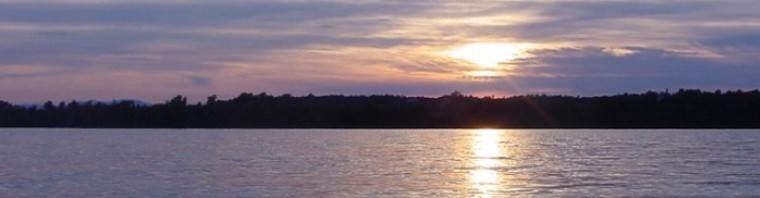
Knight Island – Lake Champlain Islands

Knight Island


Knight Island - Lake Champlain Islands

Knight Island – Lake Champlain Islands

Knight Island – located in northern Lake Champlain) can only reached by boat. This 185-acre island is a mile long and nearly a half mile wide.

It is one of three neighboring islands in Lake Champlain’s “inland sea” just east of North Hero, Vermont that are part of the Vermont State Park system. The other two are Burton and Woods Island State Parks.

Knight Island State Park includes all but 10+ acres of private land on the island’s southern tip. When on Knight Island, please respect the rights of the park neighbor and keep off the southern end.

You must make your own arrangements to get to and from the island.


Knight Island - Lake Champlain Islands


About Knight Island State Park:

Historically the island was farmed, then was uninhabited for many years. It was a privately operated primitive campground through the 1980’s. The owner lived year-round on the island and began a timber management program to supplement the camping operation.

Knight Island was acquired by the State of Vermont in 1990. Under Vermont state ownership, remote area camping is being continued on seven sites dotted around the island. Land management activities are those which will keep the island unique and unspoiled.

Knight Island is a “remote area” campground. Remote area campsites, while beautiful, are not for everybody. There are composting outhouses and is no potable water supply. The island’s seven campsites, six of them with rustic log lean-to’s, are situated approximately equidistant around the 2 ½- mile shoreline, and are connected by a trail system. This gives you great privacy, but it also means you’re going to have to walk. From the State dock, it’s anywhere from 1/3 of mile to a mile to the campsites, and while your water taxi operator may be able to get you closer, you shouldn’t bring anything you’re not prepared to carry in and carry out.

Camping is by reservation only on designated sites. A permit may be obtained at the caretaker’s residence on the west shore, and is necessary before setting up. Reservations (2-night minimum unless traveling by paddle-craft) made within two weeks of your proposed stay are handled through Burton Island State Park. Maximum eight (8) persons per site; fourteen (14) night maximum stay.

Fires are permitted in designated fire rings.

Knight Island - Lake Champlain Islands


Getting to Knight Island State Park:

Knight Island is 2 miles east of North Hero village, and 5.5 miles northwest of Burton Island/Kill Kare State Parks. If you do not have a boat of your own, you will need to arrange water taxi service. Driftwood Tours, (802-373-0022) features a USCG-licensed captain and operates from Grand Isle County, Vermont. Rates vary by group size and pickup location.

If you have your own boat, be advised, there are no docks, so you’ll need to either beach it (it’s fairly rocky) or anchor off. Visitors should also be aware that weather conditions do occur which can make travel on Lake Champlain hazardous. Delays in getting to and from the Island are not uncommon.

Options for Knight Island parking include Knight Point State Park in North Hero (a three-mile crossing) or Kill Kare State Park in St. Albans (a five-mile crossing), where there is no parking fee for Knight Island campers.

If launching a power boat, Kill Kare is your best option. Knight Point is fine for kayaks and canoes. The closest access (2 miles) is from North Hero village, where you may arrange private parking ($) through Hero’s Welcome General Store: 802-372-4161. If traveling to Knight Island via water taxi, you should make your own parking and pickup arrangements through your water taxi operator.

Other Articles About Lake Champlain Islands:   List of Lake Champlain's Islands

Watch Out for Frogs, Salamanders by Roads

Watch Out for Frogs, Salamanders by Roads


Be On the Lookout for Frogs, Salamanders by Roads


A great wildlife migration is happening now in Vermont, and it’s taking place right at our feet.

You may have already heard the spring peepers or wood frogs calling in your backyard. Or perhaps you’ve noticed salamanders crawling over rocks in a nearby stream. Amphibians are on the move, but their spring breeding migration can too often become deadly.

Amphibians migrate by the thousands each spring in search of breeding pools. This migration often takes them across roads and highways where they are killed by cars, which contributes to the species’ decline in Vermont, according to biologist Jens Hilke with the Vermont Fish & Wildlife Department.

“Frogs and salamanders become active on rainy spring nights,” said Hilke. “On these nights, drivers should slow down on roads near ponds and wetlands, or try to use an alternate route. These amphibian ‘hotspots’ can lead to the death of thousands of animals on a single night.” 


Hilke is asking drivers to report these hotspots, or areas with large numbers of frogs and salamanders that cross the road all at once. They can contact the Vermont Reptile & Amphibian Atlas by emailing Jim Andrews at jandrews@middlebury.edu.

“We work hard to identify these hotspots and to mitigate the problem whenever possible to help give these animals a better chance of survival,” said Hilke. 

The Fish & Wildlife Department is working with the Vermont Agency of Transportation to include culverts and wildlife barriers in road construction plans to allow wildlife, from frogs to moose, to more safely cross the road. The town of Monkton has completed a highway project aimed at providing amphibians with a safe way to cross under the road. 

Conservation officials and volunteers also work together on rainy spring nights to slow traffic and manually move amphibians across the road.

Vermonters who want to give to the Fish & Wildlife Department’s work to help frogs and amphibians can donate to the Nongame Wildlife Fund on line 29 of their state income tax form.


Other Lake Champlain Wildlife Articles:

Mud Creek Wildlife Management Area

Mud Creek Wildlife Management Area


Mud Creek Wildlife Management Area

Description

Mud Creek Wildlife Management Area is located in Vermont’s northwestern corner in the town of Alburgh. Its 1,151 acres are mostly marshland, with a small upland component. It’s owned by the State of Vermont and managed by the Vermont Fish & Wildlife Department. The property extends from the Canadian border south to the mouth of Mud Creek in Lake Champlain’s Ransom Bay. The heart of the marsh can only be accessed by small boat.

History
The area around Alburgh and Swanton has a long history of occupation by Native Americans, notably the Abenaki Tribe. Both Anglo-Europeans and French Canadians later settled in this part of Vermont. Alburgh was chartered to Ira Allen in 1781; the town was named after him. Early settlers were mostly occupied with clearing forest and farming in the rich Champlain Valley soils; the latter is still the main land use in the Mud Creek drainage.

This WMA is a patchwork of many small land purchases. The Vermont Fish & Wildlife Department made its first acquisition in 1953, using Pitman Robertson funds. The Nature Conservancy facilitated some of the most recent land acquisitions.

Habitat

Mud Creek is a sluggish stream that begins in Canada and flows south to Lake Champlain. There is a water control structure that has raised the water level and created more marshland.
Mud Creek Wildlife Management Area sand beachMud Creek WMA is a mix of cattail-dominated emergent marsh, deep bulrush marshes and forested swamp. Forest swamp communities include red maple-black ash, spruce-fir-tamarack and red maple-northern white cedar.At the mouth of the Creek there is a small section of lake sand beach.

A rare plant called Torrey’s rush occurs in the marsh, as well as other interesting plants such as matted spike-rush, yellow water-crowfoot, nodding trillium and cattail sedge.
Vermont’s endangered spiny softshell turtle is sometimes a summer visitor.

Mud Creek Wildlife Management Area is home to spiny softshell turtles

spiny softshell turtle

Mud Creek Wildlife Management Area is home to Torrey's rush

Torrey’s Rush

Fish and Wildlife

Wildlife

Some mammals that might be encountered are white-tailed deer, gray squirrel, raccoon, beaver, muskrat, mink and otter.

Birds

American coot at Mud Creek Wildlife Management Area

American coot

There are excellent birding opportunities for wetland species such as pied-billed grebe, least bittern, sora, Virginia rail, American coot and common moorhen. The endangered black tern has nested here. Wetland-dwelling songbirds include eastern kingbird, belted kingfisher, marsh wren, swamp sparrow and northern waterthrush.

Upland game species in the WMA are ruffed grouse, turkey and woodcock. Breeding waterfowl include Canada goose, black and wood ducks, mallard, hooded merganser, blue-winged teal and goldeneye, with other species during migration.

Reptiles and Amphibians

Many species of herptiles can be found at Mud Creek WMA. Look for blue-spotted, spotted and red-backed salamanders, newts, and green, pickerel, northern leopard and wood frogs. The rare western chorus frog may also be present. Turtle species include snapping turtles, painted and northern map turtles. State-endangered spiny softshell turtles are sometimes found near the mouth of Mud Creek. Northern water and garter snakes are also present.

Fish

Fishing is allowed on the Controlled Hunting portion of the WMA through September 1st. Yellow perch, bullhead and northern pike are some species that may be caught.


Mud Creek Wildlife Management Area pond

Usage

Mud Creek WMA is open to regulated hunting, trapping, fishing, hiking and wildlife viewing. Hunting and trapping are allowed using a controlled permit process. Hunting in the Controlled Hunting Area is by permit only.

Fishing is allowed on the Controlled Hunting portion of the WMA through September 1st. Yellow perch, bullhead and northern pike are some species that may be caught.

Notes

Video of Mud Creek Wildlife Management Area

Directions

Mud Creek Wildlife Management Area map

Mud Creek Wildlife Management Area map
Click map to enlarge


Take RT 78 west from I-89 in Swanton, VT. From the Northway (I-87) take RT 11 in Champlain, NY east to RT 2, then take RT 2 to the stoplight at the intersection of RT 78 and turn left.

The best access is from RT 78 as it crosses the Creek, where there is an old railroad bed that has been made into a biking and hiking path. There are times when access along the path is restricted.

Please read and follow  the posted regulations.
Green Woods Road in Alburg cuts through the northern end of the WMA.


Other Articles on Lake Champlain Valley WMA's:

Vermont Fishing Regulation Change Hearings Scheduled

VT F&W Board Seeks Public Input on Proposed Fishing Regulation Changes

Series of public hearings scheduled for Newport, Rutland, Montpelier and St. Albans

The Vermont Fish & Wildlife Board is  of seeking public input on proposed fishing regulation changes that could go into effect starting in 2018.


Among the proposed changes are:
  •  Simplifying regulations on the Missisquoi River for muskellunge and year-round fishing.
  • Expanding the Little River two-trout bag limit to the section between the Route 2 bridge and Waterbury Reservoir Dam.
  • Making the existing Dog River test water designations for catch and release trout fishing into permanent regulations.
  • Changing the catch and release trout regulation on the Batten Kill to include an “artificial lures and flies” gear restriction, similar to the Dog River.
  • Simplifying the Clyde River regulations and expanding its catch and release season for salmon to include September and October.
  • Establishing rules against snagging fish.
  • Creating a new definition of “immediate control” for ice fishing.
  • Moving existing language related to commercial angling into a new section.
  • Expanding the “legal method of take” for fish to include spear gun and cross bow on a limited number of species.
  • Implementing new bags limits on bowfin, redhorse sucker and longnose gar.
  • In addition, an angling group is proposing from September 1 to October 31 on the Clyde River from Lake Memphremagog upstream to the West Charleston dam, that angling be restricted to fly fishing with floating line, unweighted leader and one unweighted artificial fly with a single hook.


Hearing Schedule

The Board will be hosting four public hearings to gather comments on the proposals, and will accept written comments through May 17, 2017. 

The hearings start at 6:30 p.m., and the schedule is as follows:

  • Tuesday, May 2 in Newport at the Emory Hebord State Office Building
  • Wednesday, May 3 in Rutland at Rutland High School
  • Thursday, May 4 in Montpelier at the Pavilion Building at 109 Main Street
  • Tuesday, May 9 in St. Albans at the St. Albans Town Education Center.


To submit questions or comments to the Board, email fwinformation@vermont.gov. 

To learn more about the proposed regulation changes, the public hearing schedule, or the Vermont Fish & Wildlife Board, visit the “Fish & Wildlife Board” page under the “About Us” section at www.vtfishandwildlife.com.


Other Lake Champlain Fishing Articles:

Record Fish Caught in Lake Champlain

Record Fish Caught in Lake Champlain

Record Fish Caught in Lake Champlain freshwater drum

Joseph Whalen Jr. with
25.54# Freshwater Drum-

Lake Champlain has long been considered a fishing hotspot. But did you know that the lake not only offers great fishing for a large variety of fish, it offers a variety of LARGE fish?

Lake Champlain boasts four New York State record fish and eighteen of the Vermont state record fish! Five other Vermont state record fish were taken from Lake Champlain tributaries. That’s twenty-seven records for the two states from Lake Champlain and its feeders.

2016 saw new records for freshwater drum in both New York and Vermont three months apart, interestingly by a father and daughter (see Two Record Fish).


New York State Record Fish Caught in Lake Champlain:

Bowfin                             12 lb. 14 oz.          34″        07/8/2006       Mary Forrest

Freshwater Drum         29 lb. 14 oz.         36.5″      06/4/2016      Amelia Whalen

Longnose Gar                 13 lb. 3 oz.           49.5″      07/25/1999    Kenneth Cassant

Redfin Pickerel                2 lb. 1 oz.            n/a         03/5/1989      Duane Gillespie


Vermont State Record Fish Caught in Lake Champlain:

American Eel                   6 lbs 4 oz            42.00″    02/19/1989    Robert Tatro, Jr.

Bass, Rock                        2 lbs 0 oz           13.25″     07/16/1981    Brad French

Bowfin (bow)                 12 lbs 1.5 oz        30.75″     08/07/2015    Louis Phelps IV

Burbot                               8 lbs 13 oz         28.12″     02/11/2012     Bryan LaBelle

Carp                                 33 lbs 0 oz           35.00″     05/27/2006      Jeffery W. Reed

Carp (Bow)                     44 lbs 6.8 oz        41.25″     05/20/2014     Darren Ouellette

Record Fish Caught in Lake Champlain Darren Ouellette with record 44# Carp (taken by bow)

Darren Ouellette with record 44# Carp (taken by bow) 05/20/2014

Cisco (Lake Herring)      1 lbs 1.44 oz      14.50″     08/17/2015     Montanah Latulippe

Freshwater Drum         25 lbs 8.6 oz        34.50″    09/18/2016      Joseph Whalen

Gar, Longnose               18 lbs 12 oz         54.50″    08/11/2007      Texas A. Aiken

Record Fish Caught in Lake Champlain longnose gar

18# Longnose Gar Vermont record
by Texas A. Aiken

Gar, Longnose (Bow)   17 lbs 13.6 oz      50.50″    08/17/1996      Tom Casavant

Mooneye                           2 lbs 7 oz           17.00″    08/26/1985      Thomas J. LaVigne

Perch, White                    2 lbs 9.3 oz        16.60″    02/17/2014      Anthony Austin

Pike-Pickerel Hybrid      8 lbs 7 oz           32.00″    02/10/2010      Kurin Friend

Salmon, Landlocked    12 lbs 10.4 oz      32.00″   10/18/1994       Brian Latulippe

Sauger                               3 lbs 2.5 oz         20.00″   02/03/1980       David Paya

Smelt, Rainbow              0 lbs 12 oz          13.00″   03/06/1978       Bernadine Maranville

Record Fish Caught in Lake Champlain walleye

Vermont state record 14# Walleye caught 02/10/2010 by Richard Levesque

Walleye                          14 lbs 8.8 oz         32.50″   02/10/2010        Richard Levesque

Whitefish, Lake              9 lbs 7 oz            27.00″   02/24/1999        Victor Raymond


Also, the Vermont state record Bowfin (angling), Fallfish, Muskelunge, and Redhorse Sucker (both angling and bow) were taken from the Missisquoi River and Otter Creek – both Lake Champlain tributaries.

There’s tremendous opportunity to catch big fish on Lake Champlain, as these state records show. Maybe the next record lunker from Lake Champlain will be yours.


Other Lake Champlain Fishing Articles: