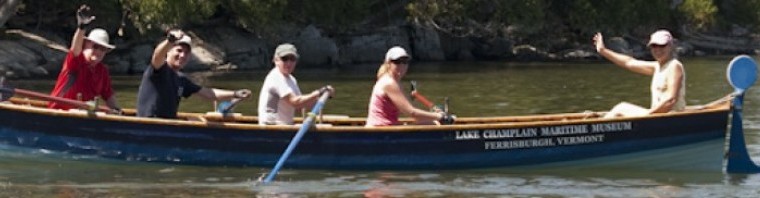
Lake Champlain Designated the 6th Great Lake

Lake Champlain Designated the 6th Great Lake (for a while)

Lake Champlain Designated the 6th Great Lake (for a while)Everyone can agree that Lake Champlain is great, but it is not officially a Great Lake. Much of the confusion over this is due to Lake Champlain briefly being designated the 6th Great Lake.

Without fanfare on March 7, 1998, President Bill Clinton signed a bill giving Lake Champlain official designation as one of the Great Lakes, at least as far as Federal research money goes. On March 25, 1998 Congress voted to rescind the ‘Great Lake’ designation for Lake Champlain.

The designation allowed Lake Champlain to receive Sea Grant funding.  Although the designation was quickly revoked, the funding still exists. This is funding is important, because Lake Champlain is connected to the Great Lakes and faces many similar issues including invasive aquatic species, as well as, phosphorus over-loading.


Lake Champlain Designated the 6th Great Lake for Sea Grant

Lake Champlain Sea Grant is dedicated to improving the understanding and management of Lake Champlain, Lake George and their watersheds for long-term environmental health and sustainable economic development.

A cooperative program of the University of Vermont and SUNY Plattsburgh, Lake Champlain Sea Grant is a part of a national network of 35 projects and programs at coastal and Great Lakes colleges, coordinated by the National Oceanic and Atmospheric Administration.

Congressional Pushback

The move had angered some lawmakers from the Great Lakes states. ”If Lake Champlain ends up as a Great Lake, I propose we rename it ‘Lake Plain Sham,’ ” said Representative Steven C. LaTourette, an Ohio Republican who co-chaired the Congressional Great Lakes Task Force.

Lake Champlain is not even the sixth largest lake in the United States – in area or in volume.  It is only sixth in the United States in terms of its length. Although not a ‘Great Lake’ anymore, Lake Champlain is still a great lake!

Lake Champlain

This 128-page softcover book features stunning historical images from the archives of Lake Champlain Maritime Museum and other regional collections, and includes chapters on Patriotic Sites and Celebrations; Commerce in the Canal Era; The Age of Steam; Crossing Lake Champlain; Recreational Boating; Summer and Summer Folk; Hunting and Fishing; and Winter. ‘Lake Champlain’ tells the story of this historic, busy commercial corridor and recreational destination.

Buy Here

More About Lake Champlain History:

New York DEC Advises About Poor Ice Conditions

New York DEC Advises Ice Anglers and Others About Poor Ice Conditions

Ice anglers and others thinking of traversing the frozen surface of waters in the Adirondacks and other locations should be aware that due to the recent warm temperatures and rain, ice has thinned.


New York DEC Advises Ice Anglers and Others About Poor Ice Conditions

Areas of ice around inlets, outlets and shorelines of largely open water or thin ice should be avoided. Rivers, streams and most channels of moving water through lakes and ponds are also open or covered with thin ice and should be avoided.

Ice near boathouses and docks, especially those using “bubblers” or other ice prevention devices, should also be avoided. Motor vehicles, snowmobiles and ATVs should not be taken on any ice at this time.

No ice should be considered safe without checking the thickness and condition of the ice first.

If you plan to go on the ice, be safe on the ice.


Other Lake Champlain Ice Fishing Articles:

New York’s 2016 Aquatic Invasive Species Control Efforts

New York’s 2016 Aquatic Invasive Species Control Efforts

The New York State Park’s Boat Steward Program is one of many boat steward programs throughout New York State. These programs offer targeted educational programming to increase awareness about aquatic invasive species (AIS) and other environmentally significant issues.

New York's 2016 Aquatic Invasive Species Control Efforts. Boat Launch stewards

Ariana London, Lake Champlain Steward, completes a boater survey on her tablet computer at the Great Chazy boat launch in 2015, (photo by Meg Phillips, State Parks.)

NY State Parks adopted regulations in 2015 to help try to protect lakes and rivers from the costly effects of invasive species. Learn more about the new regulations here.

The regulations states that a boater:

  • shall not launch or retrieve their watercraft from a Parks-owned boat launch facility unless the watercraft’s water-containing compartments (livewell, bilge, bait bucket) are dry.
  • has inspected the watercraft to ensure that there is not plant or animal material attached to the motor, trailer, body of the vessel, etc.

The Boat Steward Program maintains stewards at many of NY Parks-owned boat launches who conduct educational boat inspections to give step-by-step instructions on ways to effectively inspect your boat and dispose of invasive species. These demonstrations are both free and voluntary.

Boat Stewards can teach how to prevent spreading aquatic invasives and what to look for. They are primarily educators and do not play a role in the enforcement of regulations.

Many New York State Parks-owned boat launches across the state are also equipped with disposal stations for aquatic plant or animal material. The disposal stations are designed to provide a place for plant or animal material to dry in an upland area. The dried out material is typically collected and placed in the garbage to prevent further spread.

If you see a red-shirted Boat Steward, stop and ask any questions you might have.

New York's 2016 Aquatic Invasive Species Control Efforts. Boat inspection

Becca Reile, Buffalo Harbor Steward, completes a boat inspection in 2015, (photo by Meg Phillips, State Parks.)

2016 Boat Steward Program Highlights:

  • 2016 was the first year of a 2-year $500,000 grant from the Environmental Protection Agency to expand the boat steward program at state park launches
  • 16 stewards worked 30 launches within the Great Lakes Basin, Lake Champlain Basin, and Saratoga Lake
  • There were 21,431 voluntary inspections out of 22,344 boats (95% of boaters allowed their boat to be inspected)
  • 2,982 boats were discovered carrying aquatic invasive species
  • 54,627 boaters interacted with Stewards, with many boaters receiving education about Clean-Drain-Dry and aquatic invasive species
  • 11 invasive species removal projects in partnership with Strike Teams and other partners
  • 10 educational events
  • Approximately 500 bags, or around 12.5 tons, of water chestnut were removed from Selkirk Shores State Park.
 New York's 2016 Aquatic Invasive Species Control Efforts education

Jared Reed Saratoga Lake steward participates in Invasive Species Awareness Week in Albany (Matt Brincka, State Parks.)

 New York's 2016 Aquatic Invasive Species Control Efforts

Kelly Butterfield, Sunset Bay steward and Holly Flanigan, Fort Niagara steward pulling invasive water chestnut at Grindstone Marsh in Selkirk Shores State Park (Matt Brincka, State Parks)

Click on these links for more information about the Boat Steward Program and aquatic invasive species.

If you’re interested in volunteering to help remove invasive species in your area, become a member of your local Partners for Regional Invasive Species Management (PRISM) program.

If you are interesting in seasonal work removing invasive species in State Parks, check out the State Parks employment page.

Custom Lake House Champlain Sign
Custom Lake House Champlain Sign – Rustic Hand Made Vintage Wooden Sign 11.25 x 60 Inches!!
High-quality materials will make this sign last for years. 100% USA Materials.
Truly a one of a kind gift.
Order Here


More Lake Champlain News:  

New York DEC Adopts New Freshwater Fishing Regulations

New York DEC Adopts New Freshwater Fishing Regulations

New or Modified Regulations Established for Various Fish Species and Methods of Take

New freshwater fishing regulations go into effect April 1, 2017, New York State Department of Environmental Conservation (DEC) Commissioner Basil Seggos announced yesterday.

“New York State is known for fantastic freshwater sport fishing opportunities,” said Commissioner Seggos. “These regulatory changes will help maintain these opportunities and enthusiasm for the sport.”

The changes to sport fishing regulations are the result of a two-year process that included biological assessment, discussions with anglers, and a formal 45-day public comment period. DEC used public comments to complete the changes. These regulations will be published in the 2017-18 Freshwater Fishing Regulations Guide that will be available at all license sales vendors and on-line in March.

Highlights of the new regulations include:

  • Adjustments to existing walleye regulations in various waters throughout the state, including measures to protect spawning walleye and conservative minimum harvest size and creel limits in waters where managers are trying to establish self-sustaining populations of this popular sport fish. Regulations have also been liberalized for two waters where successful management has resulted in increased walleye abundance, Chautauqua Lake (Chautauqua County) and Franklin Falls Flow (Essex County);
  • Modifications to DEC Region 7 Finger Lakes rules to increase survival of rainbow trout, brown trout, and Atlantic salmon and to create a greater balance between these species and lake trout;
  • Allowing ice fishing in some waters and restricting the number or use of devices used for fishing through the ice (including, but not limited to hand line, tip-up, tip down, etc.) in other waters to protect self-sustaining populations or limit fishing pressure;
  • Simplification of the black bass regulations in Lake Erie by compressing the three existing seasons into two while expanding opportunities to use live bait and harvest one large bass per day during a special season;
  • Greater protection for northern pike in the St. Lawrence River due to the declining abundance of spawning adults and poor recruitment of young-of-year fish in the Thousand Islands region;

  • Relaxing of special regulations for trout and Atlantic salmon for various waters in DEC Region 5 (Adirondack Region) due to poor survival; and
  • Multiple updates to clarify existing regulations.

For a summary of the regulations changes, visit DEC’s website.


Other Lake Champlain Fishing Articles:

Milton, Vermont Angler Catches Muskie Through Ice

Milton, Vermont Angler Catches Muskie Through Ice

Milton, Vermont Angler Catches Muskie Through Ice

Ryan Carpentier with 32″, 14.1# muskellunge he caught while ice fishing on Lake Champlain on February 12, 2017. Carpentier measured, weighed and successfully released the fish.

When the flag on one of his tip-ups sprang to life on Lake Champlain on a clear February morning, Ryan Carpentier didn’t know what was lurking on the other end.

Just before sunrise about three miles off shore, near Tyler Place in Swanton, Carpentier set up 15 tip-ups, rigging them with 50-pound test, pike minnows and a circle hook with red and blue beads.

Around 8:30 a.m., he got his first and only bite of the day.

“I knew it was one of the biggest fish I had ever caught just by the way it ran,” Carpentier said. “I thought it was huge northern [pike]. It did four or five nasty runs like I’ve never experienced before. It was definitely a fight,” 

After a ten minutes struggle, Carpentier hauled a  38-inch, 14.1-pound muskellunge through the ice with the help of two friends.

After hauling the fish out of the water, the group quickly measured, weighed, photographed the fish and got it back in the water as quickly as possible.

The catch was the first muskellunge Carpentier had ever caught, but it was also one the few successful wintertime muskie catch and releases documented on Lake Champlain in Vermont.

After he released the fish and posted the photos on social media, Vermont Fish & Wildlife fisheries biologist Shawn Good contacted Carpentier.

“What I can tell you is I’ve never heard of a muskie getting caught through the ice in Vermont,” Good said. “It is important to say that because they do get caught through the ice in other states where they’re more abundant.”

Good has headed the department’s muskellunge team since 2008, a group that has spearheaded the muskie restoration movement on Lake Champlain. Lake Champlain’s muskie population was assumed lost between 1970 and 1980, Good said.

In the 1970’s-1980’s the muskie population was depleted and surveys and efforts to find any evidence of muskies in the lake by the Vermont Fish & Wildlife staff came up dry. Wildlife officials speculate the sharp decline was a reaction to poor water quality in the Missisquoi River and Missisquoi Bay after a chemical paper mill spill on the river, a tributary of Lake Champlain.

Good said overfishing did not play a role in the hurting the population, but he stressed the need for anglers to follow Vermont’s strict catch and release muskie policy.

To help revive the population, Good and his team have stocked 5-6″ muskie fingerlings. On average, Good said he stocks between 6,000 and 7,000 summer fingerlings per year. Since the start of the program, Good said he has stocked 50,620 fish in the Missisquoi River and Missisquoi Bay – the last known place where the native population was known to exist.

“We’re trying to return a species that was native to Lake Champlain back to the lake and reestablish its place in the fish community,” Good said. “We stock them in August and they’re hatched in April or May, so they’re four months old. The theory is, the larger they are when you stock them, the higher the probability of them surviving.”

Other states stock muskie at different stages including fry, which are typically 1 inch long, and fall fingerlings, which are about 10 inches. The number of fish stocked is relative to the size of the fish being stocked, Good said.

For instance, stocking muskie fry means that between 80,000 and 100,000 are stocked per year, with the expected survival rate hovering around 10 percent.

While Good noted Carpentier’s catch was uncommon because muskies are elusive, low-density predators he pointed to the instance as a larger sign that the restoration program is having a noticeable impact on the muskie population.

“At some point in the near future, there could be a recreational, targetable population of muskie that can sustain a sport fishery,” Good said. “It’s really encouraging.”

Vt. Fish & Wildlife fisheries biologist Shawn Good confirmed the catch and release of a second muskellunge, between 34-35 inches, through the ice on Lake Champlain less than 10 miles. That fish was caught by Gage Honsinger.


Other Lake Champlain Ice Fishing Articles: