Vermont Free Fishing Day 2017

Grand Isle Family Fishing Festival

Vermont Free Fishing Day 2017

Give fishing a try during Vermont’s Free Fishing Day 2017 at the Grand Isle Family Fishing Festival!

Saturday, June 10, 2017
9:00am to 3:00pm
Ed Weed Fish Culture Station,
14 Bell Hill Rd, Grand Isle, VT

Give fishing a try during Vermont’s Free Fishing Day 2017 at the Grand Isle Family Fishing Festival!

Vermont Free Fishing Day 2017 lets both resident and nonresident anglers fish in Vermont for the day without a license.

The Grand Isle Family Fishing Festival is designed for young anglers and families offering basic fishing instruction and the chance for kids to catch big trout in the hatchery pond. The festival is free, open to the public and no fishing experience or equipment is needed.

Saturday, June 10, 2017
9:00am to 3:00pm
Ed Weed Fish Culture Station,
14 Bell Hill Rd, Grand Isle, VT

The event features a series of fishing skills learning stations, including knot-tying, fish identification, line casting, hook setting, fish cleaning, and more. After kids and families complete several stations they will be issued a loaner fishing rod and bait and given a chance to practice their skills by fishing the hatchery pond, stocked with some very impressive trout.

For more information contact the Ed Weed Fish Culture Station at 802-372-3171


Other Lake Champlain Fishing Articles:

Beautiful Lake Champlain Islands Sunset

Beautiful Lake Champlain Islands Sunset


Beautiful Lake Champlain Islands Sunset

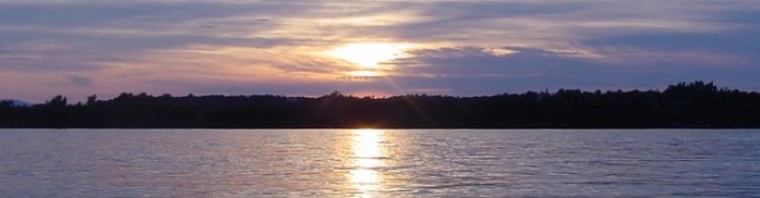
This beautiful Lake Champlain Islands sunset was photographed June 3, 2017 in Grand Isle, Vermont by Betsy Dall.

Lake Monster Mysteries: Investigating the World's Most Elusive Creatures

Lake Monster Mysteries: Investigating the World’s Most Elusive Creatures
For centuries, eyewitnesses around the world — from America to Africa, Argentina to Scotland — have reported sightings of dark, mysterious creatures in area lakes that surface briefly, only to quickly disappear. While the most famous lake monsters of Loch Ness and Lake Champlain have gained international notoriety, hundreds of lakes around the world are said to shelter these shadowy creatures. Lake Monster Mysteries is the first book to examine these widespread mysteries from a scientific perspective. By using exhaustive research and results from firsthand investigations to help separate truth from myth, the authors foster our understanding of what really lurks in the cold, murky depths.

Buy Here

More Lake Champlain Sunset Photos:  


Clean Water Funding Opportunities

Clean Water Funding Opportunities

The Vermont Department of Environmental Conservation’s (DEC) Clean Water Initiative Program recently released three Requests for Proposals (RFP) for clean water funding, including Ecosystem Restoration Grants. Details are outlined below and posted on the DEC’s Clean Water Initiative Grants webpage.


Ecosystem Restoration Grants support the design and construction of water pollution abatement and control projects that target nonpoint sources of pollution. See the DEC Watershed Projects Database for possible projects. All other projects included in applications must be added to the database before the application deadline. Proposed projects must be discussed with your regional Basin Planner.

  • Release date: May 23rd
  • Application due date: July 6th

A detailed application manual is available online and provides step-by-step instructions to apply for funding.

Ecosystem Restoration Grant applicants are also encouraged to attend or view the webinars being offered:

  • Thursday, May 25th, 10:30 am – 12:00 pm: Presentation on key changes to the RFP, including application types, project categories, and reporting processes, as well as a question and answer session. The presentation and webinar recording (YouTube) are now available online.
  • Tuesday, June 13th, 11:00 am – 12:30 pm: Question and answer session for grant applicants. Partners can attend in-person in Montpelier (limited seating is available) or online via Skype for Business. For more information and to RSVP if attending in-person, please contact Marli Rupe at (802) 490-6171.

 Clean Water Funding Opportunities.  Rumney School After

An Ecosystem Restoration Grant funded project at Rumney School in Middlesex, completed by the Winooski Natural Resources Conservation District (WNRCD), reduces stormwater runoff from the school grounds, which had caused erosion and sediment pollution in nearby Martin Brook. The project also serves as an outdoor classroom for students. (Photo Credit: WNRCD)

 Clean Water Funding Opportunities.  Rumney School Before

Before the project was installed.


Clean Water Block Grants support statewide partner(s) to administer completion of “construction-ready” clean water improvement projects identified on the DEC Watershed Projects Database “Go List.” RFP Questions and Answers are now posted online.

  • Release date: May 23rd
  • Application due date: June 5th


River Corridor Conservation Easement Grants support implementation of priority river corridor easements to reduce flood hazards, and improve water quality and wildlife habitat.

  • Release date: May 11th
  • Application due date: June 21st

For more information on any of these grant opportunities, please contact Marli Rupe at (802) 490-6171.

Lake Champlain

This 128-page softcover book features stunning historical images from the archives of Lake Champlain Maritime Museum and other regional collections, and includes chapters on Patriotic Sites and Celebrations; Commerce in the Canal Era; The Age of Steam; Crossing Lake Champlain; Recreational Boating; Summer and Summer Folk; Hunting and Fishing; and Winter. ‘Lake Champlain’ tells the story of this historic, busy commercial corridor and recreational destination.

Buy Here

More Lake Champlain News:  

East Bay Wildlife Management Area

East Bay Wildlife Management Area

East Bay Wildlife Management Area

Description

The East Bay Wildlife Management Area encompasses 38 acres in the Washington County town of Whitehall, New York. The WMA is north of the Sciota Road (County Route 10).

East Bay Wildlife Management Area signThe land was purchased from Donald and Ann Touch in 1984 with money from the Environmental Bond Act of 1972. The area, known locally as part of Finch Marsh, lies in a narrow river valley among steep sided hills. A scenic; ledge borders the northern portion of the property. The rest of the marsh to the west and northwest are lands owned by the Nature Conservancy. The neighborhood around the marsh is used for agriculture and rural residential purposes.

Habitats

The majority of the parcel is emergent marsh. Emergent marshes are areas that have approximately six inches of water during the growing season or permanently. The dominant plants are “emergent” species such as cattails, arrowhead, pickerel weed, rush and smartweed to name a few.

The wetland portion of the property has also been designated as a flood hazard zone. Flooding occurs not only during heavy rains and intense spring thaws, but also during periods of prolonged Northerly winds in which the water from Lake Champlain is displaced to the south.

Fish and Wildlife

East Bay Wildlife Management Area muskrat

East Bay WMA muskrat

Emergent marshes are considered the most valuable of our wetland areas and East Bay Wildlife Management Area is no exception. Here, waterfowl can be found in abundance, using the area for resting during the spring and fall migrations and for rearing young ducklings during the summer months. Hunters can find should look for mallards, black duck, teal, merganser and wood ducks. Trappers will find that the high productive quality of the marsh is such that it produces a high population of muskrats. During the winter months, muskrat houses can easily be seen protruding above the ice and snow. These valuable and prolific furbearers also share their wetland home with beaver, mink and otter.

East Bay is home to a diverse fisheries community and a popular fishing hot spot in both the summer and winter months. Fisherman can expect to find bass, crappie, walleye, pike, catfish and panfish in relative abundance. Two hand launches are located a short distance from the parking area off of Sciota Road (County Route 10).

East Bay WMA is an identified Bird Conservation Area (BCA). New York State Bird Conservation Areas are state-owned lands and waters designated to safeguard and enhance populations of birds in New York State. These areas provide important habitats for birds. In spring and summer, many birds rely on these areas for breeding, food, and shelter. Some birds winter at BCA’s, while others use BCA’s as resting and feeding areas during migration. BCA’s are designated as they support one or more of the following: An unusually high diversity of bird species; large concentrations of one or more bird species; endangered, threatened, or rare bird species; or an exceptional or rare bird habitat.
A variety of wildlife can be seen in the area.

Usage

East Bay WMA hardwoods

East Bay WMA hardwoods

The primary purposes of East Bay Wildlife Management Area (WMA) is for wildlife management, wildlife habitat management, and wildlife-dependent recreation. The WMA is open year-round, but parking lots are not plowed in winter months.

East Bay WMA is managed by DEC’s Division of Fish and Wildlife for wildlife conservation and wildlife-associated recreation (hunting, trapping, wildlife viewing/photography). Funding to maintain and manage this site is provided by the Federal Aid in Wildlife Restoration or “Pittman-Robertson” Act, which is acquired through excise taxes on sporting arms, ammunition and archery equipment.

Notes

The following activities are not permitted in East Bay WMA:

  • Using motorized vehicles, including:
    • all-terrain vehicles
    • snowmobiles
    • motorboats
  • Swimming or bathing
  • Camping
  • Kindling fires
  • Using metal detectors, searching for or removing historic or cultural artifacts without a permit
  • Damaging or removing gates, fences, signs or other property
  • Overnight storage of boats
  • Cutting, removing or damaging living vegetation
  • Construction of permanent blinds or other structures such as tree stands
  • Littering
  • Storage of personal property
East Bay WMA map

East Bay WMA map
(Click Image to Enlarge)

NOTE: Ticks are active whenever temperatures are above freezing but especially so in the late spring and early fall. Deer ticks can transmit Lyme and several other diseases.


Directions

From Whitehall, take US Route 4 east for 1 mile. Turn left onto County Route 9A and proceed 1 mile to end. Turn right onto County Route 9 and proceed ½ mile. Turn left on Stalker Rd. and proceed ½ mile to end. Turn right on Sciota Rd. (County Route 10) and proceed for ¼ mile. The WMA and parking area is on the left


Other Articles on Lake Champlain Valley WMA's: .
 

Cloak Island – Lake Champlain Islands

Cloak Island – Lake Champlain Islands

Cloak Island

Cloak Island

Cloak Island is a small island in Grand Isle County, Vermont. Cloak Island is located off the south-east coast of Isle LaMotte, Vermont at latitude: 44°50’7.15″, longitude: -73°19’45.48″. It is near Reynolds Point and The Head on Isle LaMotte. It is about 7 1/2 acres in area.

History:

Cloak Island - Lake Champlain IslandsThere is an interesting legend about how the island got its name. As the story goes, in the 1770’s when Eleanor Fisk, of nearby Isle LaMotte got tired of her husband’s abuse, she hitched up her team of horses and set out across frozen Lake Champlain towards Alburgh, but was never seen again. Later, her red cloak was found along the bushes and rocks of the island, which would forever be known as Cloak Island. 


Another variation of the story tells that after Eleanor Fisk went missing, concerned neighbors suspected she had drowned, but wanted proof. They gathered at the lake and dropped her red cloak into the water. According to an old Yankee superstition: to find the missing body of a drowning victim, you must drop a cloak belonging to the missing victim into the water, and it would come to rest over the body. The cloak eventually found its way over to the small island and got tangled on the beach, thus giving Isle LaMotte’s tiny neighbor it’s new name – Cloak Island.


Eleanor’s body was never found, and some say her ghost still walks the shores of Cloak Island. A fitting, spooky end to this sad story from America’s colonial era, but hardly the only such ghost story from the area.


Other Articles About Lake Champlain Islands:   List of Lake Champlain's Islands