Tag Archives: news

Vermont’s Water Quality Bill

Vermont Water Quality Bill Headed For Approval

Vermont’s landmark water quality legislation that aims to curb the flow of pollution into the state’s waterways and create a road map for future water quality initiatives has cleared the Senate and House and is headed to Governor Shumlin’s desk for signing.

Gov. Peter Shumlin said he supports the bill and is looking forward to signing what he says is the most significant clean water bill in the state’s history, Vermont’s Water Quality Bill is a measure designed to counteract years of worsening pollution in Lake Champlain and other state waters.


 Vermont Governor Peter Shumlin supports Vermont's Water Quality Bill

Vermont Governor Peter Shumlin

“Cleaning them up is not only important to who we are as Vermonters, it is integral to the state’s environmental and economic health. Both the House and the Senate have now acted to do that, and I look forward to signing a strong water quality bill into law.” ~  Vermont Governor Peter Shumlin.


The Problem With Lake Champlain’s Water Quality

Phosphorus pollution from farm runoff and wastewater discharges cause toxic algae blooms (cyanobacteria) that have killed fish and caused the health department to close Lake Champlain beaches. Vermont officials say the toxins could also pose problems for drinking water supplies that draw from the lake.  In addition to Lake Champlain, dozens of other lakes and streams in Vermont are impaired, according to the state.

Despite the hundreds of millions of dollars spent to keep pollutants out of the lake, toxic algae blooms have grown, fed by phosphorus-laden runoff of rain and snowmelt from farms, roads and parking lots and discharges from municipal wastewater treatment plants. About 40 percent of the phosphorous is tied to farm runoff, and a focus of the new programs will be helping farmers reduce manure-laden runoff.


Vermont's Water Quality Bill targets blue green algae blooms

blue green algae bloom


In his inaugural address last January Shumlin warned that if Vermont didn’t deal with the problem, the federal Environmental Protection Agency (EPA) could impose a much more expensive solution on the state.

Under intense pressure from the EPA, the Legislature agreed with the Shumlin’s request for about $7.5 million worth of programs to clean up Lake Champlain and other state waters.

“It’s finally going to lead to Vermont cleaning up, over time, the blue-green algae and polluted water that has been plaguing us recently. In a state where we cherish our natural resources, where we have the most beautiful state in the country, it’s unacceptable that we’re losing the battle for clean water. And this bill is going to put us on the path to recovery.” ~ Peter Shumlin.

What are the Costs of Improving Water Quality?

The new legislation will help access tens of millions of dollars in federal funds and provide state funds to be used to clean up waters in the Lake Champlain watershed and across the state by reducing polluting runoff from farms, roads and other sources.

While the actual costs of the cleanup are unknown. A 2013 VT Department of Environmental Conservation (VDEC) report found it would cost $156 million per year for 10 years to restore Vermont’s water quality to state standards. A Vermont Agency of Natural Resources (VANR) report issued in 2015 from the Vermont Agency of Natural Resources (VANR) stated it would cost from $66 million to $172 million to upgrade wastewater treatment plants in order to meet the phosphorus reductions proposed under the state’s Lake Champlain cleanup plan.

The $7.5 million water quality bill, H.35, is partially funded by a 0.2% surcharge on the state’s property transfer tax, which is paid by the purchaser when buying a property. This property transfer tax is set to sunset in 2018, at which time lawmakers expect to replace it with another funding option. Many lawmakers had wanted to develop a tax policy that was based on the amount of pollution created by certain properties.

The Water Quality bill calls for $2.6 million to be spent next year in support of 8 new positions at the Agency of Agriculture and 13 positions at the Department of Environmental Conservation. These agencies will use the money for outreach, education and enforcement of water quality regulations.

“We’re going to have more people out in the field working on water quality,”  ~ Chris Bray, chair of the Senate Natural Resources Committee.


Details of the Water Quality Bill

The bill includes fees on pollution permits, medium and large farm registrations, and the sale of non-agricultural fertilizer and pesticides. In addition to providing money for cleanup projects and technical support for people who need it, the legislation also carries an enforcement mechanism for people who refuse to comply with the law.

There are five major initiatives to the Water Quality Bill:

  • Reduce polluted runoff from farm fields – to be accomplished through outreach, education and enforcement of water quality regulations.
  • Address stormwater runoff from state and town highways.
  • Require the use of stormwater runoff reduction practices in our downtowns and village centers.
  • Invest in important resources like wetlands, floodplains, river corridors and forests that naturally reduce stormwater pollution and erosion.
  • Create a new Clean Water Fund to assist communities and our partners with their role in restoring and protecting our state’s waters. The Clean Water Fund will also audit how money from the clean water fund is spent and whether water quality projects have been effective at reducing pollution.  A board composed of administration appointees would make budget recommendations on how to spend the money.


Runoff from Farm fields would be reduced in Vermont's Water Quality Bill

Unprotected farm fields loose topsoil as well as farm fertilizers and other potential pollutants as runoff when heavy rains occur.

“Vermont state agencies will now have the authority and capacity to work with local governments, landowners, businesses and farmers to address this category of pollution. This initiative will be done in a manner that is cost-effective, comprehensive, and targeted to the most significant sources of pollution.” ~ David Mears, commissioner of the Vermont Department of Environmental Conservation

In the future, the bill will expand Vermont’s authority regulating stormwater runoff from farms, roads and cities, as well as, direct pollution from wastewater treatment plants. Over the next year, the Shumlin administration will draft rules to implement new water quality programs. The administration said it needs time to develop new regulations, including pollution control measures for farms.

“The real substance of what’s to come is yet to be proposed,” ~ Kim Greenwood, water program director at Vermont Natural Resource Council

According to Kim Greenwood, water program director at Vermont Natural Resource Council, the bill is like a “prescription” for the next few years. Greenwood said the public should keep pressure on the administration as the rules are written.


“We will have to revisit it. Something as large and as complex as this bill, we’re going to have to take a look at it next year, and the year after and the year after that to make sure that it’s operating and fine tune it so that it’s operating properly, but it’s a big step in the right direction.” ~ Rep. David Deen, chairman of the House Committee on Fish, Wildlife and Water Resources, the original sponsor of the bill

Although the bill is aimed at Lake Champlain, it will also improve other waters in Vermont by attempting to reduce the amount of pollutants reaching the lake by runoff from farms, roads, roofs and parking lots.

But the bill will also make it possible to use grants and donations from private sources to help pay for the projects. And it will unlock tens of millions of dollars in federal funding for some of them, according to State Representative David Deen.


Vermont's Water Quality Bill aims to clean up Lake Champlain

Lake Champlain


The Future For Lake Champlain

Vermont now must wait for a decision from the EPA as to whether or not the plan to improve Lake Champlain water quality filed last year will be approved. The EPA will consider whether the state has the authority and the money to implement that plan when making its decision.

The agency plans to release a draft Total Maximum Daily Load, or TMDL, for public comment by mid-July. The EPA’s models demonstrate that Vermont’s current plan will not achieve the required phosphorus reductions.

New York, whose Lake Champlain coast is less developed and has less farmland, and Quebec, which includes a small section of the northern part of the lake, also have worked to reduce pollution enters the lake and its tributaries.


More Articles About Lake Champlain and Blue Green  Algae:

Other Lake Champlain News:


Vermont Using EPA Guidance for Blue-Green Algae Toxins in Lake Champlain

As we all prepare for summer fun on Lake Champlain, Vermont state agencies and local partners are preparing for summer blue-green algae cyanobacteria monitoring.

Vermont Using EPA Guidance for Blue-Green Algae

blue green algae bloom

Blue-green algae occurs naturally in the waters of Vermont, including in Lake Champlain, and thrives in nutrient-rich conditions. The algae can multiply rapidly in warm conditions.

These annual monitoring efforts by the Vermont Department of Health, the Department of Environmental Conservation (DEC) and the Lake Champlain Committee (LCC) will be guided by new advice from the EPA on blue-green algae toxins in drinking water.

“We welcome the new science-based guidance from EPA, and will use it to determine the appropriate advisory level to protect the health of Vermonters”, ~ Sarah Vose, PhD. -Vermont Health Department Toxicologist 

EPA Guidance for Blue-Green Algae in Lake Champlain

For the past few years the departments of Health and Environmental Conservation and LCC have partnered to train drinking water operators on blue-green algae monitoring, so that public water systems are prepared for blue-green algae blooms. The Health Department laboratory is also equipped to test for cyanobacterial toxins.

This summer, operators of drinking water facilities on Lake Champlain will regularly monitor their raw and treated water for toxins.

“DEC will be working with any water system providers that find toxins in their water to manage the threat to drinking water… Source protection is the first line of defense for safe drinking water. Everyone should remember that keeping nutrients like phosphorus out of our lakes and reservoirs is one of the most important steps we can take to protect our drinking water.”  ~ Ellen Parr-Doering, assistant director of the Drinking Water and Ground Water Protection Division, DEC.

Vermont Using EPA Guidance for Blue-Green Algae

blue green algae

Drinking water containing blue-green algae toxins can cause stomach problems and liver damage in humans and pets. Health and environmental officials plan to review the EPA guidance and incorporate it into Vermont’s existing advisory levels for blue-green algae toxins in drinking water. The updated advisory levels are expected to be in place by early summer.

Resources:

More Articles About Lake Champlain and Blue Green  Algae:


Vermont Trophy Trout Stocking Under Way

rainbow_trout_fwVermont Trophy Trout Stocking

Vermont Fish & Wildlife has begun its annual fish stocking. The stocking program will ultimately put over one million adult fish, fry and fingerlings – including over 18,000 trophy trout, into Vermont waters in 2015.

The fish stocking program is designed to help maintain and restore fisheries, which will increasing angling opportunities.

“We’ll be stocking nearly 18,500 large, two-year old trout across Vermont, and anglers will have the opportunity to fish over 34 miles of rivers and 28 lakes and ponds that are designated as trophy water. This means excellent fishing opportunities and an even better chance for anglers to catch the fish of a lifetime.” ~ Adam Miller, fish culture operations manager with Vermont Fish & Wildlife.

A complete list of trophy trout waters and the 2015 stocking schedule is shown below.


Trophy Trout Stocking 2015:

WATERBODY TOWN WEEK OF: 2YR RAINBOW 2YR BROWN TROUT TOTAL
Black River Cavendish-Weathersfield 5/4, 5/11, 5/18, 5/25 1500 500 2000
East Creek Rutland 4/27, 5/25 1250 1250
Lamoille River Fairfax 4/27, 5/11 600 600
Mississquoi River Enosburg 4/27, 5/11 1000 1000
Otter Creek Danby/Mt Tabor 5/4, 5/25 500 500 1000
Passumpsic River St. Johnsbury 5/4, 5/18 500 500 1000
Walloomsac River Bennington 5/4, 5/18 750 250 1000
Winooski River Waterbury, Duxbury 5/4, 5/18 1000 350 1350


Additional Trophy Stocking 2015:

In addition to annual stockings of yearling trout, the following ponds will also receive 2-year old trout.

WATERBODY TOWN SPECIES NUMBERPLANNED
Adams Reservoir Woodford BKT 60
Amherst Lake Plymouth RBT 60
Black Pond Hubbardton RBT 200
Colby Pond Plymouth BKT 60
Colton Pond Sherburne BKT 250
Echo Lake Plymouth RBT 70
Goshen Dam Goshen BKT 350
Harriman Reservoir Wilmington-Whitingham BKT 1000
Holland Pond Holland RBT 300
Kent Pond Sherburne RBT 500
Kent Pond Sherburne BKT 150
Knapp Pond No 1 Reading-Cavendish RBT 90
Knapp Pond No 2 Reading-Cavendish BKT 80
Lake Paran Bennington/Shaftsbury RBT 500
Lake Raponda Wilmington RBT 770
Lake Rescue Ludlow RBT 330
Lake Shaftsbury Shaftsbury RBT 40
Lefferts Pond Chittenden BKT 150
May Pond Barton BKT 350
McIntosh Pond Royalton BKT 200
McIntosh Pond Royalton RBT 300
Mill Pond Windsor RBT 300
Miller Pond Strafford RBT 600
Miller Pond Strafford BKT 200
Osmore Pond Peacham BKT 100
Rood Pond Williamstown,Brookfield BKT 550
Searsburg Reservoir Searsburg BKT 250
Smith Pond Pittsford BKT 250
Stoughton Pond Weathersfield RBT 600
Sunset Lake Brookfield BKT 250
Sunset Lake Brookfield RBT 300
Zack Woods-Perch Ponds Hyde Park/Wolcott BKT 50

*Trophy area stocking dates are subject to change based on weather and water conditions.


Yearlings/Smolts Stocking 2015:

SPECIES INLAND WATERS LAKE CHAMPLAIN
Brook Trout 56300
Brown Trout 62150 48000
Lake Trout 13700 57000
Landlocked Atlantic Salmon 33000 148839
Rainbow Trout 67500
Steelhead Trout 10000 58000
Total 242650 311839

Because the Roxbury Fish Hatchery was destroyed by Tropical Storm Irene there are fewer trout being stocked in inland lakes and streams. Roxbury had produced a significant number of the yearling and trophy fish every year, and there are plans to rebuild the hatchery.

More Lake Champlain Fishing Articles:

Cold Water Boating Hazards

After a long, cold… very cold… North Country winter, we’re all looking forward to warmer weather recreational activities. These first warm days of spring often attract boaters and other recreational enthusiasts to the many beautiful lakes, rivers, and streams across Vermont and northern New York.

Particular caution is necessary early in the boating season across the North Country

This week’s rescue of three kayakers from Lake Champlain illustrates the need for proper precaution. Two of the kayaks capsized dumping the boaters into Lake Champlain. Fortunately they were able to be towed to Valcour Island by the third kayaker, and eventually rescued and treated for hypothermia.

The Hazard of Cold Water BoatingThe National Weather Service (NWS) in Burlington, Vermont urges extreme caution when boating, canoeing, or kayaking during the spring, when water temperatures typically remain dangerously cold in the event of a capsize.

Boaters should be aware of the dangers posed by cold water temperatures. On pleasantly warm and dry days in April and May, it is easy to forget that the water temperature is much responds more slowly to seasonal changes and warms much more slowly than the air temperature.

Rivers are often still affected by melting snow runoff from the mountains. Lakes continue to up-well cold water from below until a temperature of 39°F, and then increase in temperature slowly based on amount and days of sunshine, near surface air temperature, and the size of the body of water. On Lake Champlain, climate records indicate that surface water temperatures are typically in the upper 30s in late April, and only rise into the 40s during May.

Cold Water Immersion

Immersion in cold water can quickly become life threatening. If you capsize in water with temperatures in the upper 30s and 40s, hypothermia can occur in a matter of minutes. Since water conducts body heat away up to 26 times faster than air of the same temperature, the cold water rapidly weakens the extremities – making them numb and weakening the ability of muscles to work effectively.

Protect Yourself From Danger When Cold Water Boating

The NWS urges the following safety measures to protect yourself and maximize your enjoyment of area waterways:

  • Consider postponing small craft boating activities until water temperatures become warmer in late spring and summer.

    Cold Water Boating Hazards

    PFD Wear it !

  • If you do choose to boat, canoe, or kayak in April or May, wear a dry suit appropriate for water temperatures in the high 30s and 40s.
  • Wear all recommended protective gear to guard against the cold water in the event of an accident or capsize.
  • Remember, no matter the season, when you are on the water, always wear your life jacket.

Safe boating is no accident!

Take the time to think safety first and plan appropriately for weather and water conditions before heading out on lakes, rivers, and streams.

Further Hypothermia Information:

More Articles About Lake Champlain Safety:


John Guilmette Access Improvements Update

John Guilmette Access Update

John Guilmette Access

John Guilmette Access Area

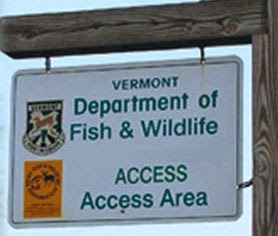
Vermont’s Fish & Wildlife Department reminds Lake Champlain anglers and recreational boaters of the continued construction at the John Guilmette Access Area in South Hero. The access area is not open for public use at this time.

Vermont Fish & Wildlife acquired the access area as part of its ongoing program to provide public access to public waters.

“The ultimate goal of the project is to make the access area safer and more user-friendly, while protecting water quality. Taking into consideration the amount of use the access area sees each year, the needs of anglers and boaters, and the protection of the lakeshore and abutting wetlands, it was critical for us to redevelop this area for sustainable future use.”  ~ Mike Wichrowski, Vermont Fish & Wildlife, facility and lands administrator.

When finished, the improved access area will feature new ramp and dock structures, and will include a number of green infrastructure components including a pervious grass parking lot, grass-lined drainage swales and rock drains.

“The reconstruction of the John Guilmette Access Area will improve boat launching, offer more organized access and parking, and provide a public facility that meets environmental and ADA standards so that all recreationalists will be able to enjoy this area of Lake Champlain,”  ~ Mike Wichrowski,  Vermont Fish & Wildlife.

mallets bay accessible dock

The John Guilmette Access Area in South Hero is currently under construction. Upgrades to the access area feature improvements that include a new dock like this one at Colchester’s Malletts Bay Access Area


Additionally, new landscaping will occur. Trees will be replanted and “no-mow” sections will be established allowing the entire project to meet the state’s new shoreline protection standards.

“While we expect the construction phase to be complete in late-May, the access likely won’t be open until mid-summer. In order to protect water quality we need the storm water infrastructure installed at the site to work properly. In particular, we need to allow for a good grass turf to establish in the parking area. If used too soon, the turf could become damaged, creating nutrient and sediment runoff and resulting in future closures to repair the area…

We’d like to thank anglers and boaters for funding the Fish and Wildlife Department’s access area program, and for their continued patience during the reconstruction process. We would also like to recognize the various neighbors, local businesses, town officials and partnering agencies for their collaboration on the project, one which will benefit the access area’s many users for years to come.””  ~ Mike Wichrowski

Vermont Fish & Wildlife will announce when the access area is ready to open for anglers and boaters to enjoy.


To view a complete list of all Vermont fishing access areas, including maps and additional information, visit http://www.vtfishandwildlife.com/Fish_Accessareas.cfm.

To learn more about fishing in Vermont or to purchase a Vermont fishing license, visit www.vtfishandwildlife.com.

Other Lake Champlain Fishing Articles: