Author Archives: Tom

Benedict Arnold: Patriot and Traitor

Benedict Arnold: Patriot and Traitor

Willard Sterne Randall (Author)

Benedict Arnold: Patriot and Traitor

There are some names that stand out in the history of Lake Champlain and the Champlain Valley: Samuel de Champlain, Robert Rogers, Ira and Ethan Allen, Thomas Macdonough and Benedict Arnold. All are thought of as heroes to some extent. The luster has worn off  for a few, as we look at  them as the complex human beings that they were in reality. ‘Benedict Arnold: Patriot and Traitor’ by Willard Sterne Randall examines the complex life of Benedict Arnold.

.

.

Traitor or Hero?

Benedict Arnold has taken his place in history as America’s greatest traitor and villain. Although I was familiar with some of his earlier heroic deeds, I was unaware of just how critical his patriotic deeds in support of the Revolution were to its success.

Arnold seemed to be everywhere at the beginning of the Revolution. Arnold was part of the capture of Fort Ticonderoga, whose cannons were transported and used to force the British to abandon Boston. He was instrumental in planning and organizing the invasion of Canada, which but for bad luck, might have succeeded. As a naval commander he built America’s first navy, and used it to stop the British advance down Lake Champlain and into New York. Later at Saratoga, it was Benedict Arnold who insured the battlefield victory for the Americans, and ultimately French support for the American cause.

Benedict Arnold’s Downfall

Image of American Revolutionary War General Benedict Arnold

Randall’s portrayal of Benedict Arnold could well be the setting of a Greek tragedy or play by Shakespeare. Despite his unequaled contributions to the Patriot cause, Arnold was slighted and his character attacked by the Continental Congress and fellow officers. In addition he was faced with financial ruin because Congress refused to reimburse him for back pay or the money that he personally spent to equip and train his troops and fleet.

Many of the same difficulties that Arnold faced were similar to those faced by another ‘hero’ of Lake Champlain military campaigns, Robert Rogers. Rogers, the charismatic leader of Roger’s Rangers in The French and Indian War, was also denied repayment for outfitting and paying his troops. He too was the target of lesser officers looking to advance or protect their standing by diminishing his. Ultimately, he too, offered his services to The Crown and earned the scorn of his countrymen.

Benedict Arnold was a very proud man and impatient for recognition and reward for his services. When these were not given, and Arnold’s character was again attacked for falling in love and marrying Peggy Shippen, a Loyalist, the outcome was almost inevitable.

Our Recommendation

This is a very interesting story and is well-told by Randall. You can almost see the unfolding of this tragedy step-by-step. I thoroughly enjoyed this book. In fact, I enjoyed it so much that I’ve read it twice.  “Benedict Arnold:  Patriot and Traitor” is a good read and I heartily recommend it.


The Naval War of Benedict Arnold

The Naval War of Benedict Arnold

By Mike Burleson

Benedict Arnold.

The later treason of Benedict Arnold cannot disguise the fact that early in the Revolutionary War he was one of Washington’s most effective generals. At the Battle of Saratoga in 1777, considered by historians as the turning point in the war against Britain, Arnold as much as any other American commander deserves credit for achieving victory. A year earlier, on October 11, 1776 off Valcour Island on Lake Champlain, the young general displayed his martial talents on the sea as well.

After the disastrous American invasion of Quebec in the winter of 1775-76, General Arnold realized the British would use the Great Lakes to reconquer her rebellious colonies. He immediately began the construction of one of the strangest fleet ever seen in American waters. Four ships were of traditional schooner design, but there were also gondolas and galleys of various size and armament:: a total of 16 warships. General Guy Carleton commanded on the British side of the Lake., who upon seeing the American construction could not but respond in kind. He proceeded to build and equip a larger a more powerful fleet of 30 warships, which included schooners and gunboats, plus a powerful sailing raft, the Thunderer.

Altogether Carleton had twice the firepower of Arnold’s makeshift fleet, though this failed to deter the aggressive colonial. Sailing with part of his fleet the American took a favorable position upwind near Valcour Island. Forming the vessels in a crescent, he hoped to surprise any British attack down the Lake. Carleton was less cautious than Arnold and sailed boldly past the island. As expected the British were surprised to find the Americans formed for battle, and Arnold had been reinforced by the rest of his fleet.

Forced to sail against a northerly breeze, Carleton could only attack with part of his. These included the gunboats, which had oars as well as sail. Arnold set out in the galley Congress (10 guns), with Royal Savage (12) and 2 others to intercept. The combined and accurate firepower of the British became too much for the Americans and they withdrew to the original anchorage. Disaster struck when Royal Savage ran aground, and later was abandon by her crew.

By noon all the American vessels were engaged, but because of Arnold’s shrewd maneuver, Carleton’s best ships were kept out of most of the fight. These included the unhandy Thunderer, Loyal Convert (7), and the big Inflexible (18). The twenty British gunboats, with the schooner Carleton (12), kept up a merciless fire on the bold rebels, however. Carleton soon lost her cable spring: uncontrollable she was towed out of the fight.

The gunboats had suffered too, and the British decided at dusk to withdraw to renew the fight at dawn. Arnold realized his smaller force would be destroyed the next day, so in the darkness his ships slipped silently pass Carleton. Come morning the Americans were 10 miles down the Lake, and Arnold anchored his battered fleet for hasty repairs. He would get no respite from the British that day, who were in hot pursuit. The battle was renewed at Split Rock.

In Congress, Arnold fought back until his ships were in tatters. Realizing the inevitable, he ordered his depleted forces, including the galleys, run aground and abandoned. Gone were 11 of the 16 American warships he had at the start of the battle. Carleton controlled the Lakes, but his own casualties prevented any further campaigning that year. The great invasion of the south was delayed until 1777, giving the Americans precious time to prepare. All this would culminate in the decisive American victory at Saratoga.

As Alfred Thayer Mahan would state: “That the Americans were strong enough to impose the capitulation of Saratoga was due to the invaluable year of delay secured to them in 1776 by the little navy on Lake Champlain.”

My name is Mike Burleson and I currently reside in historic Branchville, SC. Last year I completed my first book also titled “New Wars-The Transformation of Armies, Navies, and Airpower in the Digital Age”, available for purchase from Blurb.com As a freelancer my articles on military issues have appeared in The American Thinker, The Washington Post, Sea Classics Magazine, Townhall.com via Opeds.com, Buzzle.com, and Strategypage.com. My blog title New Wars concerning military issues is updated daily.

Article Source: http://EzineArticles.com/?expert=Mike_Burleson

http://EzineArticles.com/?The-Naval-War-of-Benedict-Arnold&id=2354566

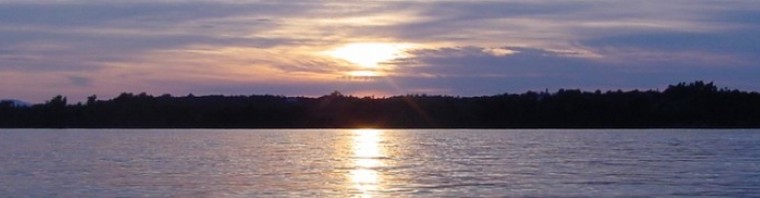
Lake Champlain: Alburgh, VT looking north

Lake Champlain from Alburgh, VT looking north

Lake Champlain from Alburgh, VT looking north


This was taken with a cell phone facing north toward Canada. Windmill Point and the Alburgh Lighthouse are toward the left in the photo.

The Alburgh Lighthouse is the northernmost one on Lake Champlain and is now privately owned. The signal beacon is operated automatically instead of being maintained by a lighthouse keeper.

Lake Champlain images

Ferrisburgh, Vermont Plans Birthday Party

Happy Birthday Ferrisburgh
Ferrisburgh Town Grange in Ferrisburgh, Vermont

Ferrisburgh in Vermont’s Addison County is gearing up for a big birthday party and a birthday of note. On June 24th, 1762 Ferrisburgh was incorporated, and on this June 24 the town will celebrate its 250th birthday. The town is spreading the word and preparing to share just what makes it so special.

Ferrisburgh in History

Town Clerk Chet Atkins and Assistant Clerk Pam Cousino described the town’s critical role in the defense of the Vergennes shipyard.  “During the War of 1812, Fort Cassin was built at the mouth of the Otter Creek to protect Vergennes and the Vergennes shipyard,” said Atkins. “In 1814 the British were at the mouth of Otter Creek, blocking in the Americans who were building a fleet at Vergennes. To escape the blockade the Americans dug a passage from Otter Creek to Kellogg’s Bay in Lake Champlain. The Americans were successful in driving off the British. They then sailed to Plattsburgh and were part of the war effort to drive the British from Lake Champlain.”

Another important date in the town’d history was the opening of the Ferrisburgh Central School in 1955; this brought together the children of the whole town who had previously been schooled in different one room schools around the area. “It gave the children a chance to all meet and to be together,” shared Atkins. This central location went on to serve not only the children but the parents as well, focusing the attention of the town at meetings, events and school plays, sporting events and special presentations.

Rokeby, the Robinson family farmstead signific...

Rokeby, the Robinson family farmstead significant for its role in the Underground Railroad. (Photo credit: Wikipedia)

Join the Celebration

The 250th celebration will be held on June 23rd from 10:00-3:00 p.m. and most events will be held at the Ferrisburgh Central School, but there will also be special events at Rokeby Museum, the Maritime Museum and other sites that are still being scheduled in the area.

The theme of the celebration is Ferrisburgh, 250 Years of Farm, Family, and Fun, The 250th Birthday Celebration for the Town of Ferrisburgh.  Watch for events including antique cars and antique tractor displays, horse drawn wagon rides and musicians and music throughout the day, a chicken barbecue at 1:00 pm,  and old fashioned children’s games as well.The Historical Society building will be open with displays and local Farmer’s Market vendors will be on site and much more.

 Related articles

Burlington-Area Bike Paths Are All They’re Cracked Up to Be

Burlington, Vermont Bike Path

Burlington, Vermont Bike Path


Burlington-Area Bike Paths Are All They’re Cracked Up to Be

Check out this article on Burlington area bike paths from Seven Days.  http://bit.ly/IcD9fg

A year after springtime floods destroyed chunks of the Burlington Bike Path, some sections are still crumbling and roped off from cyclists, runners, walkers and bladers.

Most of those gouged-out areas are finally being repaired, however, in order to make the 7.5-mile path safe for participants in the May 27 Vermont City Marathon. Mayor Miro Weinberger says that, shortly after taking office earlier this month, he directed city officials to initiate work immediately on trouble spots that had gone unrepaired for 12 months.

The imminent city-funded $30,000 fix-up of badly damaged — and dangerous — segments of the bike path is only a temporary patch job, however. There’s a plan for a more thorough, $2.1 million set of repairs of flood-eroded segments that is to be financed mainly by the Federal Emergency Management Agency.

Weinberger is also dissatisfied with the pace of that initiative, which, according to Burlington Parks and Recreation Department head Mari Steinbach, may not get under way for another year.

“There’s been too long a delay in starting this work, especially compared to the repairs of highways in the aftermath of [Tropical Storm] Irene,” Weinberger declares. He says he will push FEMA and other parties to move more quickly on the repair project.

FEMA is also expected to be the main bankroller for extensive repairs of the bike-and-pedestrian causeway in Colchester that juts into Lake Champlain. Much of that scenic, packed-gravel spit was reclaimed last spring by the swollen, raging lake. It will cost an estimated $900,000 to restore the stretch of the causeway leading from the Colchester mainland to the 200-foot-wide cut where Local Motion, a Burlington-based advocacy group, had been operating a summer bike ferry. An additional $200,000 — also mostly from FEMA — is needed to repair the northern half-mile leg of the causeway that connects to South Hero.

This entire 12.5-mile route for nonmotorized transport — running from Oakledge Park to South Hero — is known as the Island Line. It’s a major economic asset that should be restored and properly maintained, says Local Motion leader Chapin Spencer. Users of just the Burlington portion of the Island Line generate at least $6 million a year in economic activity for the city, Spencer says, citing a 2010 University of Vermont survey and estimates of the impact of events such as the marathon and USA Triathlon.

Potentially greater economic benefits can be achieved once the bike ferry service at the causeway cut is restored, Spencer says. Then, Québec tourists will be able to “pedal straight into Burlington and spend their money here,” he points out. Local Motion is thus undertaking a $1.3 million fundraising effort to construct a more secure, handicap accessible bike-ferry facility at the cut. The service will remain inoperable again this summer, due to causeway flood damage, but is projected to resume on a daily basis in 2013.

Stretches of the Burlington Bike Path, especially in the New North End beyond Leddy Park, appear to be in relatively good shape. But the most heavily used segment — between Oakledge Park and North Beach — presents major structural problems unrelated to last year’s flood.

The 26-year-old Burlington Bike Path was in generally “disastrous shape, even before the flood,” says John Bossange, head of a city council-appointed citizens task forcecharged with devising a long-term plan for this popular asset. Having been built along a former rail bed, the bike path “is sinking into the lake,” Bossange says. “Trees that were saplings when it was built now have roots underneath it. Plus, there’s been no consistent maintenance.”

The task force, which has been deliberating for the past 18 months, will soon formally present three options for what would essentially be a structural makeover of the entire Burlington Bike Path. According to a feasibility study released in March, the most basic plan would cost $11.6 million. The priciest option — involving more lighting, fencing and directional signs, as well as drinking fountains and kiosks — would run to nearly $17 million. All the proposals call for widening the right-of-way from its current eight feet to the federal standard of 11 feet, which had not been stipulated when construction of the bike path began in 1986.

If the city had to pay the full cost of these plans — which it almost certainly will not, Bossange notes — property taxes would rise $50 a year on a $250,000 home to cover the cheaper option; the same homeowner would pay $75 more than at present to finance the big-ticket option.

Will the mayor commit to supporting a bond — and attendant tax increase — to finance a rebuild of the bike path?

Bossange says Weinberger has been “all ears” in his meetings with task-force members. “He seems to get it,” Bossange says of the new mayor.

Weinberger himself cautions that it’s too soon to decide how best to fund the envisioned rehab that could take as long as five years to complete. “I want to look at all available funding sources,” he says. “It may well be that there are other substantial ways of doing this besides going with a huge bond for the city.”

The new administration does take alternate forms of transportation seriously and will be activist in its approach to them, Weinberger adds. If that proves true, it will mark a departure from how the bike path in particular has been viewed by the city in recent years.

As Bossange notes, its upkeep has been largely neglected. The unrepaired damage from the 2011 flooding serves as a dramatic indication of municipal priorities.

“Should repairs have been put on an emergency, top-drawer basis before someone got hurt?” Bossange asks. “That’s a great question I don’t have an answer for.”

Spencer does offer an explanation.

“The speed with which repairs are being made is, I think, a reflection of the unfortunate perception that it’s a recreation corridor,” he says. “It’s valued less than a transportation corridor.” Spencer notes that surveys show 25 percent of the estimated 150,000 yearly trips along the Burlington Bike Path are made for practical purposes, not purely for recreation.

Evidence of the secondary status that some officials assign to cycling and walking, in comparison to motoring, can be seen in the $143,000 that Local Motion is attempting to raise to help finance repairs to the Island Line in both Burlington and Colchester. LoMo aims to cover what the localities say is a shortfall in the amount of funding needed to match the FEMA outlays. There’s no corresponding example of a nongovernmental organization asking for charitable contributions to repair a road used by drivers.

Burlington needs to come up with about $350,000 — its share of the $2.1 million in repairs for the lakefront bike path that may not be completed until 2014. Likely sources? Steinbach identifies the Penny for Parks tax revenue set-aside and the city’s capital-improvements budget.

The city is getting a free ride, however, in regard to another bike path that is scheduled to undergo major repair this summer. The Federal Highway Administration is picking up the full $442,000 tab for restoring a flood-wrecked segment of the bike path that runs alongside the Burlington Beltline. Full federal funding is available because of the beltline path’s proximity to what is designated as a state highway, Steinbach explains.

Despite what critics describe as the previous city administration’s slacker attitude regarding the lakefront bike path, Spencer suggests that Vermont politicians are actually becoming more responsive to advocates of nonpolluting forms of transportation. He gives the Shumlin administration a B+ grade for its commitment to making federal and state funds available for a range of bicycling and pedestrian projects that previously had fewer options for funding.

Changes in the public’s attitudes toward cycling and walking could help advance efforts to transform the Burlington Bike Path into what Bossange envisions as a “world-class” model. One example of that new outlook can be seen in Colchester’s Biscayne Heights neighborhood, which is on the bike path.

Fearing that their suburban enclave would be disturbed by bikers from Burlington, a few of those residents fought construction of the bike bridge, completed in 2004, and the routing through Delta Park and past their front yards. But according to a 2009 study by the Chittenden County Metropolitan Planning Organization, there have been no reports of accidents involving cyclists or pedestrians in Biscayne Heights.

Glen Cuttitta, head of the Colchester Parks and Recreation Department, adds that he has heard no complaints about cyclists in that neighborhood.

“In general,” Cuttitta says, “people there have gotten used to bikers, and some may have started using the recreation corridor themselves. It does run right outside their door, and it’s a wonderful way to exercise as well as to see some beautiful landscapes.”